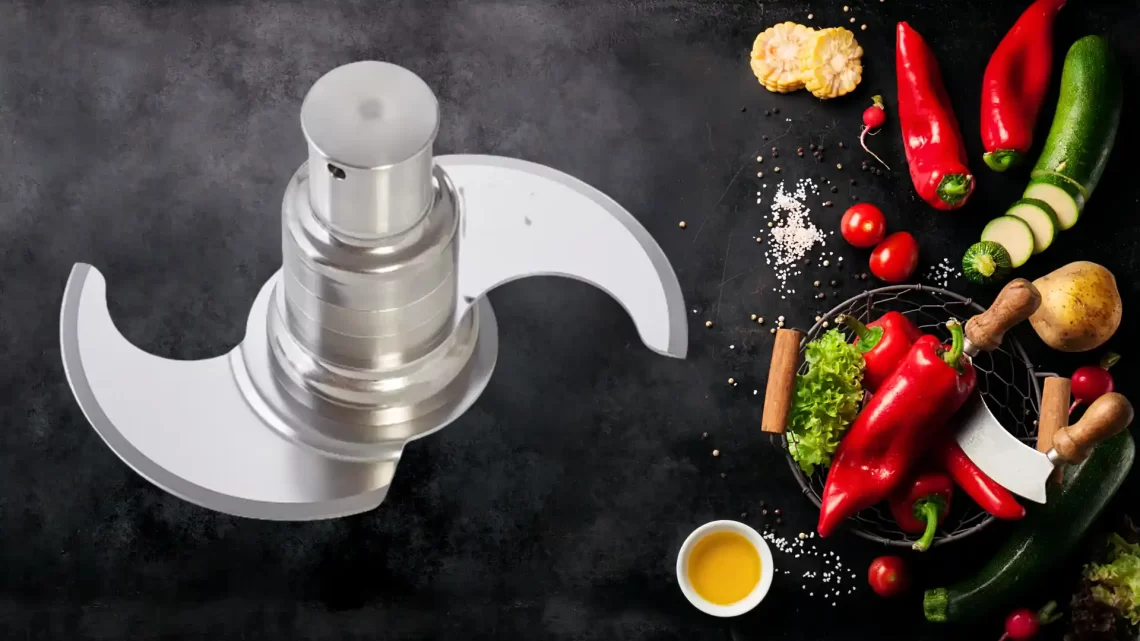
Robot Coupes, known for their prowess in food processing, wield double curved saber-like blades designed to effortlessly slice through an array of tough substances such as nuts, frozen foods, seeds, and pits. The key to their efficiency lies not in excessive refinement but in the precise shape of these blades. To endure the relentless and rapid impact forces they face, a more obtuse geometry at the blade’s edge is essential.
When it comes to sharpening these uniquely curved blades, it’s imperative to exercise caution. The process requires a specific approach due to the blade’s curved nature. Using a 2×72 belt sander equipped with a 100 grit belt, followed by a trizact A30, and finishing off with a buff, demands skill and experience. For an inexperienced sharpener, attempting to sharpen these blades could pose significant risks given their dual blades and moving parts.
The challenge arises from the curved design, which demands specialized attention. The conventional method involving a file might result in excessive thickness, suitable perhaps for one or two sharpenings but eventually necessitating a comprehensive reworking of the entire bevel. The inherent concavity resulting from crafting these blades with a round wheel further complicates the process, demanding additional effort to align with the hollow part accurately.
To address these complexities, a meticulous approach is crucial. Utilizing the slack portion of the belt during the sharpening process proves advantageous. While the flat portion could potentially lead to errors, the slack allows for a consistent angle and curve as it matches the concave nature of the blade and imparts the necessary convexity.
Maintaining a steady speed, approximately 25 percent of the maximum, is pivotal. This deliberate pace aims to minimize heat buildup and mitigate the chances of errors during the sharpening process, particularly without the aid of a jig. Additionally, using a 30-micron trizact belt aids in refining the left areas of the blades, leaving behind clean and precise scratches without overheating the metal.
Finally, the buffing stage requires a flat approach against the wheel to achieve the desired finish. Each step in this intricate process demands attention to detail and a nuanced understanding of the blade’s unique characteristics to ensure a safe and effective sharpening procedure.
Jende Industries specializes in crafting and providing top-notch sharpening tools and equipment on a global scale. Our range includes the renowned Jende Reed knives, Jende Nanocloth Strops, Jende Diamond Emulsions, and Jende Leather Knife Rolls. Moreover, we supply tailor-made stones for various guided sharpening systems like the Jende JIGS for Knives, Hapstone, Edge Pro, TSProf, KME sharpener, and Wicked Edge.
Whether you’re a musician, chef, outdoor enthusiast, or a sharpening enthusiast at any skill level, Jende caters to your needs. Explore our offerings on the official Jende Industries YouTube channel, where you’ll find detailed descriptions and demonstrations showcasing the excellence of our sharpening products and services.
Videos: