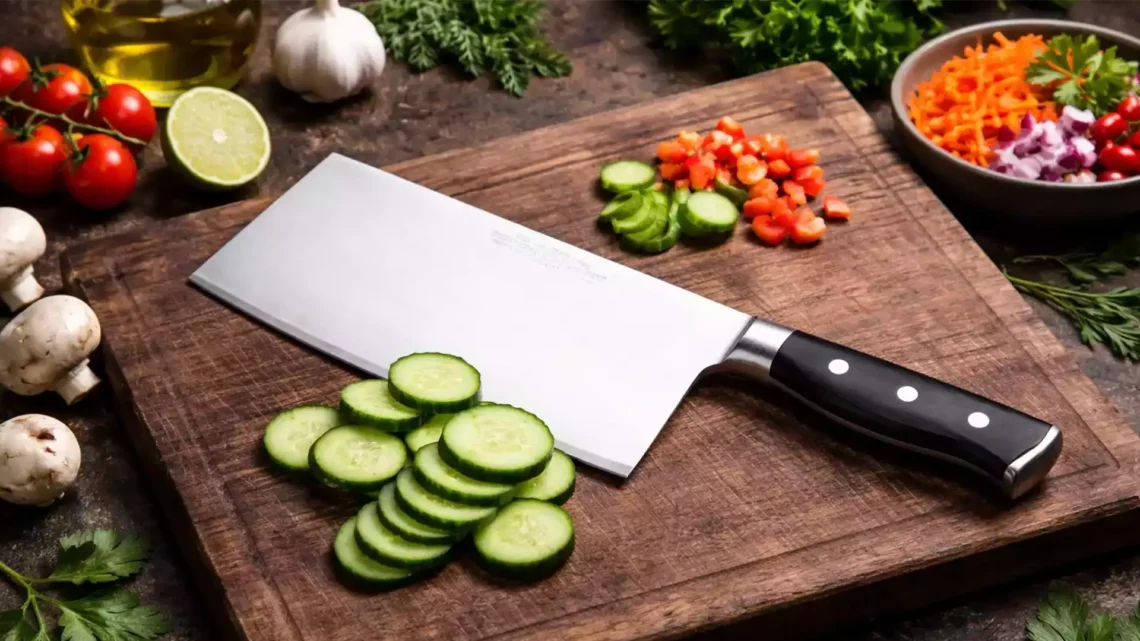
The Chinese cleaver, also called a Chinese chef’s knife, is a common knife used in the kitchen. Along with the wok and chopsticks, it is used in many tasks. It is used for work such as crushing aromatics and filleting fish, and it handles many types of preparation.
My first cleaver was a model without a brand. My father bought it from a small shop in Chinatown, Englewood City, about 40 years ago. It is hard to find where it was made, but it is still in use today. This shows that with proper care, this type of tool can last for many years and pass from one generation to another.
If you want to buy a cleaver, you can look at a restaurant supply store or a Chinese grocery store in your area or visit this link. It helps to know what features to check before buying. You can also choose from the options below that are commonly used in Chinese kitchens.
Several restaurant owners say a Chinese cleaver is one of the most used tools in their kitchens. According to Martin Yan, a cleaver helps with chopping vegetables, slicing meat, and moving food from board to pan. Many small restaurant kitchens follow this approach and keep one main cleaver for daily prep. Ken Hom also notes that a balanced cleaver supports steady cutting during long prep hours. Based on feedback from restaurant owners, two chef cleavers often recommended are the CCK Small Slicer (KF1303) and the Dexter-Russell Chinese Chef’s Knife, as both are widely used in restaurant kitchens and known for consistent performance in daily work.
What is a Chinese cleaver?
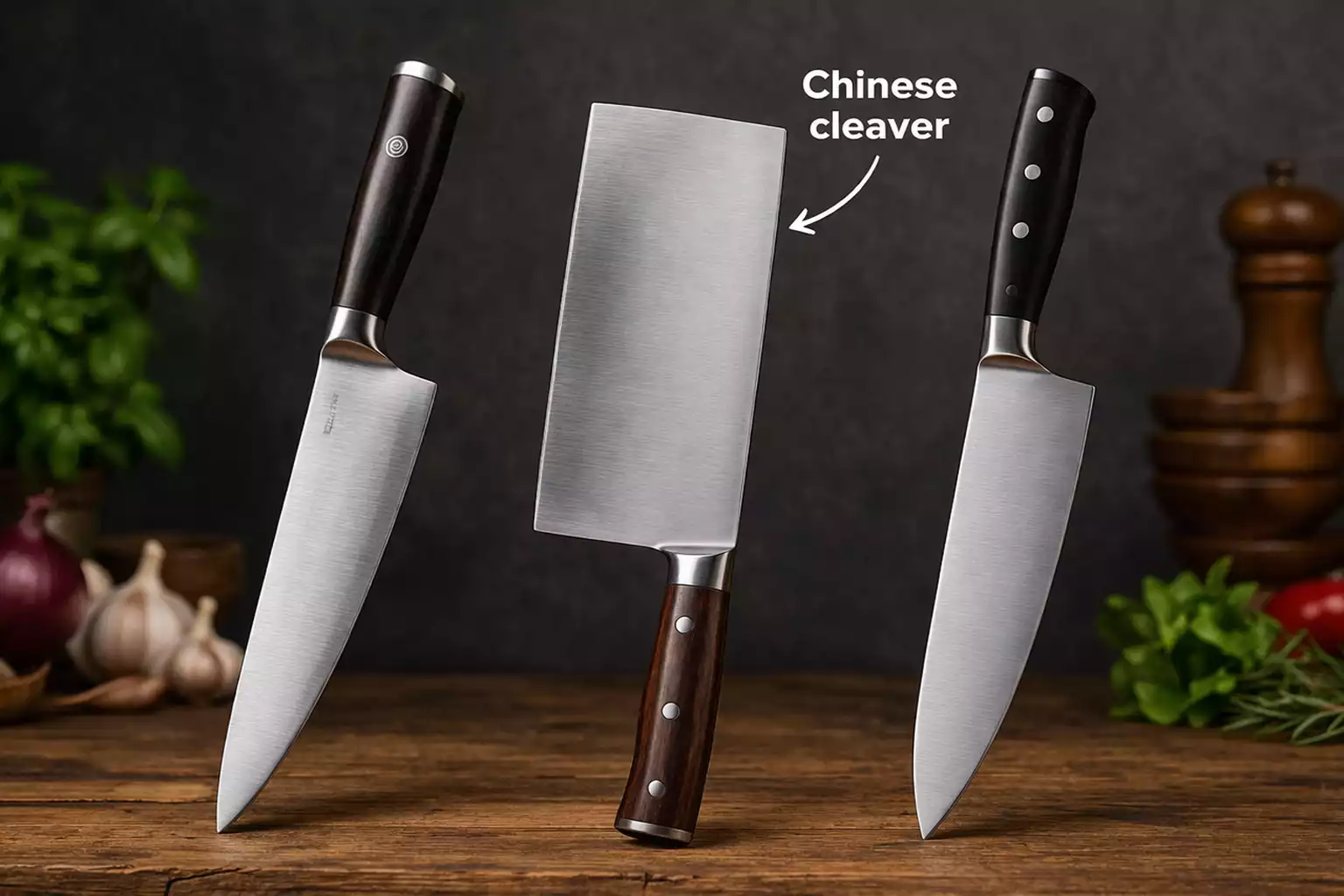
A Chinese cleaver has a large rectangular blade with a wooden handle. It is different from a Western chef’s knife in several ways. It does not have a pointed tip. Instead, the blade is square with a wide surface. A Chinese cleaver is also heavier. Mine weighs a little over 10 ounces, while a Western chef’s knife often weighs around 6.6 ounces. In a Western knife, the weight is shared between blade and handle. In a Chinese cleaver, most of the weight is in the blade, which makes it front heavy. At first, the shape and weight may feel difficult to handle. Once my father dropped our cleaver on the kitchen floor, and the tile broke instead of the knife. With practice, I found that the weight helps. The force and movement allow clean cuts with less effort.
These knives are usually divided into two main types. The first is the meat cleaver, also called gudao. It has more weight and a thicker blade, and it is used for cutting bones. The second type is the vegetable cleaver, called caidao. It has a thinner blade and is used for slicing vegetables, meat, and herbs. There is also a third type called a chopper. It combines features of both. The blade is thicker near the handle and thinner toward the front. This type can handle many tasks in the kitchen.
How to use your cleaver
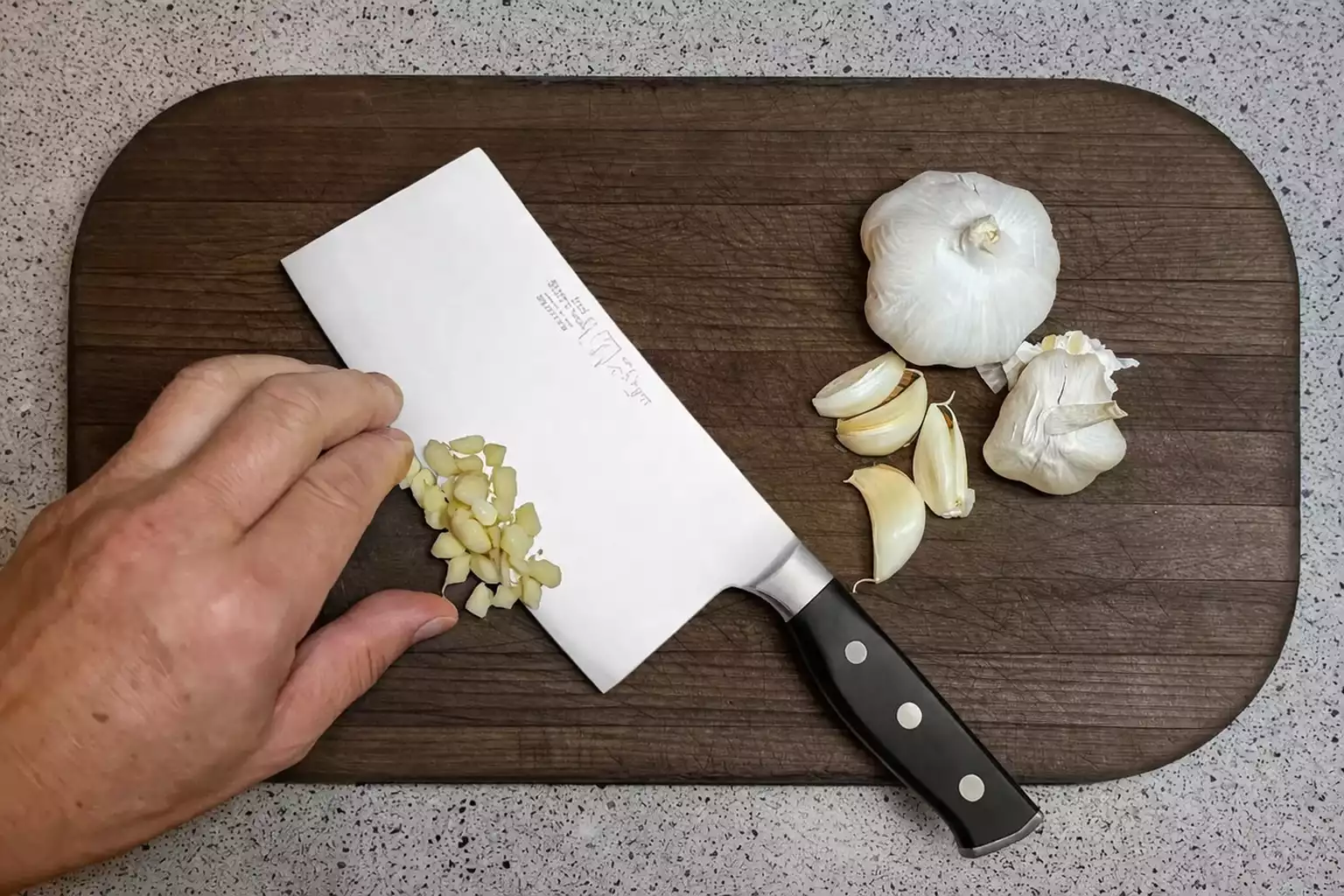
The Chinese cleaver is a balance of power and finesse. It’s capable of heavy-duty tasks like breaking down poultry, yet delicate enough to lightly score the surface of a mushroom. A chopper-style cleaver, like the one I use, is particularly adaptable handling bold chopping motions as easily as precise techniques such as slicing or mincing.
I often think of how my dad prepares one of our family’s favorite steamed fish dishes. Holding the fish in one hand and the cleaver in the other, he begins by sliding the flat of the blade along the fish to remove the scales. He then places the fish on the cutting board and uses the heel of the knife to neatly remove the tail. To finish, he switches to the front portion of the blade to cut extremely thin scallion strips, creating a light garnish that doesn’t overpower the dish’s delicate flavors. Once you start using a cleaver, you’ll discover a wide range of traditional techniques worth trying.
Of course, a cleaver isn’t meant to replace every knife. For instance, it won’t slice through a crusty loaf as efficiently as a serrated blade. Still, if you want a versatile, do-almost-everything kitchen tool, a Chinese cleaver comes very close.
With a quick downward strike, it easily cuts through dense vegetables like daikon or even watermelon. You can also press the heel into hard items like coconuts or thick-skinned pumpkins and twist the blade to split them open.
How to find the perfect cleaver
When picking a cleaver, here are some factors you should consider:
Blade steel
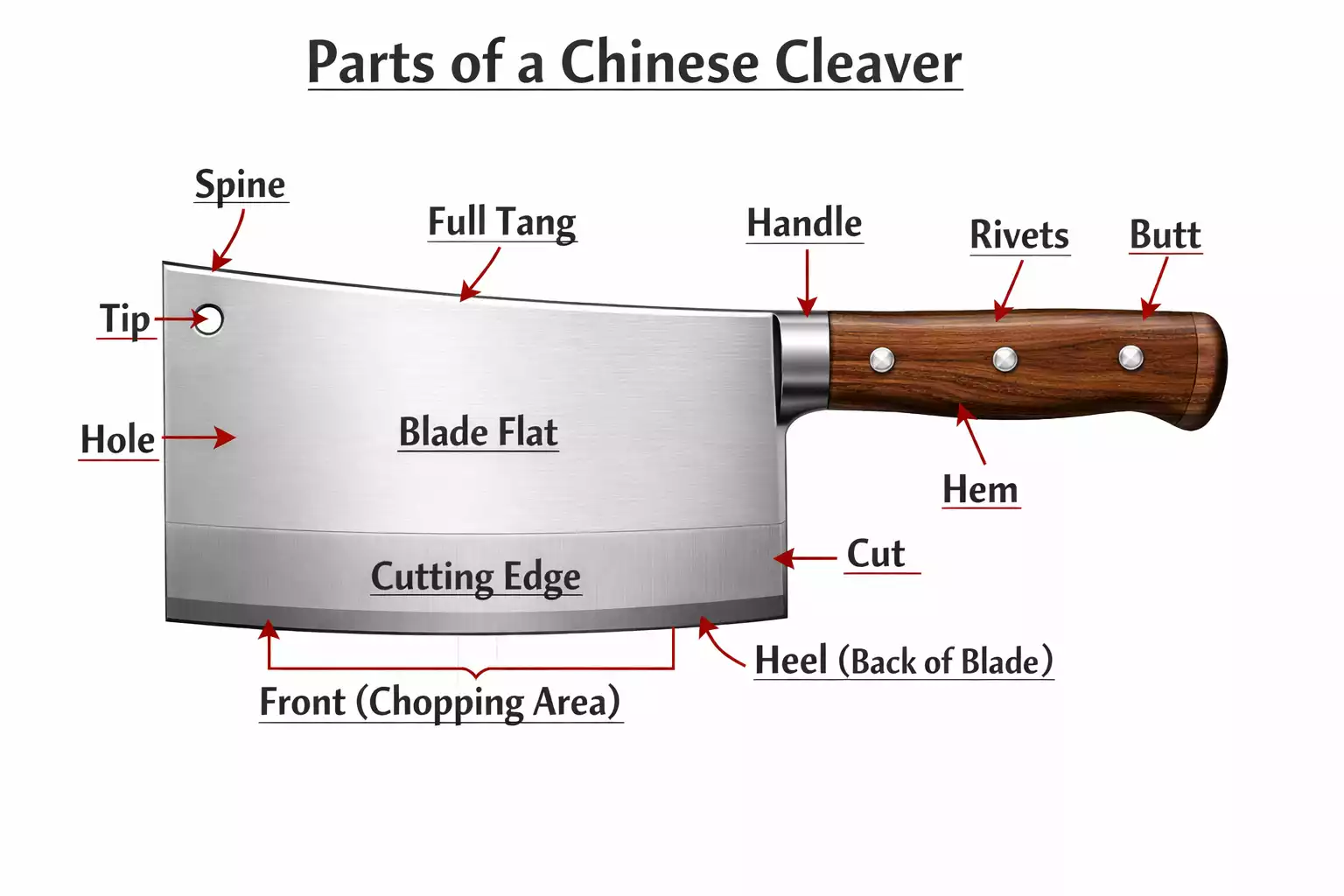
If you cook often and want excellent edge retention, carbon steel can be appealing—but it needs extra care. It sharpens easily and stays sharp longer, yet it’s more brittle and can rust if not dried properly. Stainless steel, on the other hand, resists corrosion and chipping, but it’s softer and tends to lose sharpness faster. A carbon-stainless blend offers a balanced solution, combining toughness with rust resistance.
The Maestro Wu Large Chinese Cleaver – Slicing Cleaver (D-11) uses a high-quality stainless formulation, giving you durability and low-maintenance performance ideal for everyday kitchen use.
Blade shape
Cleaver blades come in either straight rectangular profiles or slightly curved shapes from tip to heel. Both work well for push-cutting and creating neat, uniform slices—perfect for stir-fries. A gently rounded belly adds versatility, allowing rocking motions for chopping herbs, similar to a Western chef’s knife.
The Maestro Wu Large Chinese Cleaver – Slicing Cleaver (D-11) features a subtle curve that supports both precise slicing and smooth rocking cuts.
A full tang
Look for a blade that runs all the way through the handle and is secured with rivets—this is called a full tang. This construction improves strength and prevents loosening when performing heavy tasks like smashing garlic or cutting through dense vegetables.
The Maestro Wu Large Chinese Cleaver – Slicing Cleaver (D-11) includes a full-tang build with riveted handle scales for reliable strength and stability.
A comfortable grip
A good cleaver should feel balanced, solid, and comfortable during extended prep work. Testing different handles helps ensure the knife fits your grip. Using a pinch grip—thumb and index finger on the blade, other fingers on the handle—provides better control and precision.
The Maestro Wu Large Chinese Cleaver – Slicing Cleaver (D-11) has an ergonomic triple-riveted handle designed for secure control and reduced hand fatigue.
A straight spine
Always check that the spine and cutting edge are straight and free from dents or uneven spots, as imperfections can affect cutting accuracy and smoothness. A properly aligned blade ensures consistent performance.
The Maestro Wu Large Chinese Cleaver – Slicing Cleaver (D-11) is precision-ground with a straight spine to deliver clean, controlled cuts.
If I were buying a brand-new cleaver today, I would start by going to a local restaurant-supply shop or Chinese grocer and asking for its knife recommendations for home cooks. If you live anywhere near New York City’s Chinatown and are able to shop in person, try Hung Chong Imports and Chef Restaurant Supplies, two restaurant- and kitchen-supply stores that are cornerstones of the community. Korin, a New York–based vendor of premium knives and restaurant supplies, also has an online store.
Make your cleaver last
Cleaver care is similar to a regular kitchen knife. A little attention after each use helps it last longer. Wash your cleaver by hand instead of using a dishwasher. The heat and moisture can damage the handle, and the blade may hit other items and become dull. Dry it right away, especially if it’s carbon steel, because it can rust. Always cut on a wood, plastic, or rubber cutting board to protect the edge. Store the cleaver in a knife block or safe holder to avoid damage.
For maintenance, use a honing rod before each use to keep the edge aligned. Sharpen the knife with a sharpener or water stone a few times a year. A sharp knife cuts better and is safer to use. With proper care and regular sharpening, a cleaver can last for many years.
If you’re interested in choosing the right Chinese cleaver, read our article: Top 3 Chinese Cleavers: Expert Reviews & Testing.