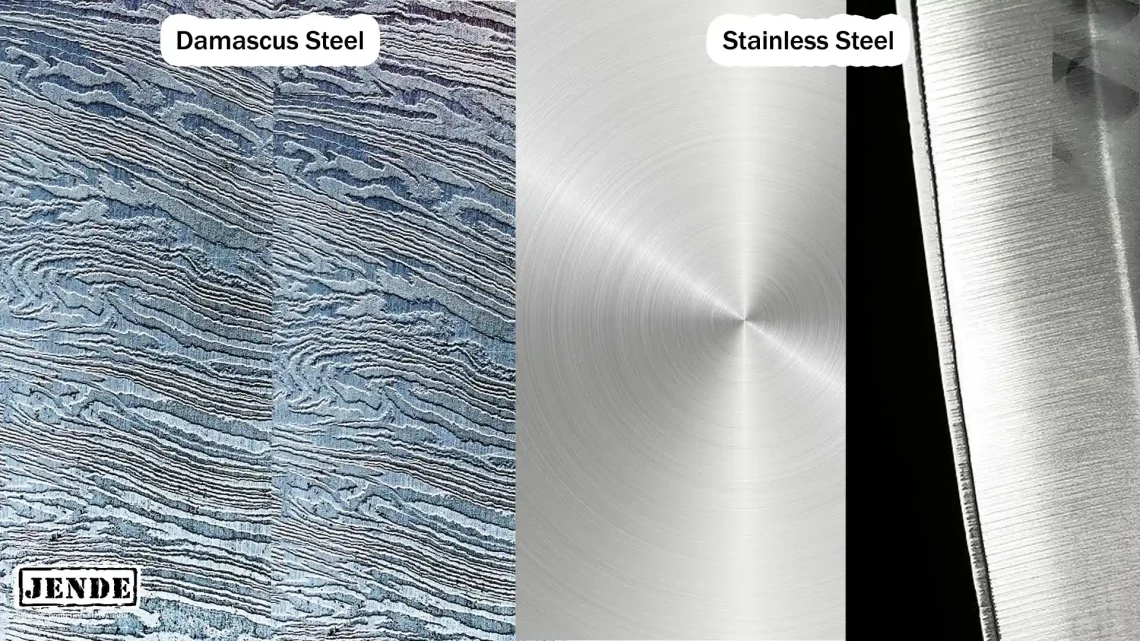
When Knowing the Differences Between Damascus Knives and Stainless Steel Knives, it’s important to consider their distinct characteristics and how they align with your needs. The most important difference is the appearance. Damascus steel looks as wavy patterns and unique swirls on the blade but Stainless Steel looks more uniform and plain appearance.
Here’s a comparison to help you choose the right knife for you:
- Composition
Made by forging together different steel alloys or a mix of iron and steel. This process creates a layered structure that enhances both the knife’s appearance and performance.
Stainless Steel: Typically consists of iron mixed with a small amount of carbon and chromium. The chromium content makes it resistant to rust, but it’s less complex in terms of composition compared to Damascus steel.
- Appearance
Known for its striking, wavy patterns and unique swirls on the blade, which are a result of the folding and forging process. This makes Damascus knives visually appealing and often sought after by collectors.
Stainless Steel: Generally has a more uniform and plain appearance. While functional and durable, it lacks the intricate patterns and aesthetic charm of Damascus steel.
- Uses
Primarily used to manufacture high-quality kitchen knives, including chef’s knives, paring knives, and utility knives. Its reputation for precision and edge retention makes it a popular choice for these applications.
- Resistance to Corrosion
Generally resistant to corrosion, though it can require maintenance to keep the blade in optimal condition. Proper care is essential to prevent rusting and maintain its appearance.
Stainless Steel: Highly resistant to rust and corrosion due to the chromium content. This makes it a low-maintenance option for those who want a reliable, durable knife with minimal upkeep.
- Durability
Offers excellent durability and edge retention due to its layered construction. However, the durability can vary depending on the specific blend of steels used and how well the knife is maintained.
Stainless Steel: Known for its strength and durability, stainless steel knives are robust and hold up well under regular use. They are less prone to chipping or cracking compared to some types of Damascus steel.
Both Damascus and Stainless Steel knives have their own strengths. Damascus knives are celebrated for their beauty and historical craftsmanship but may require more maintenance. Stainless steel knives are valued for their practical, low-maintenance qualities and versatility in various kitchen applications. Your choice will depend on whether you prioritize aesthetic appeal or ease of maintenance and versatility.