
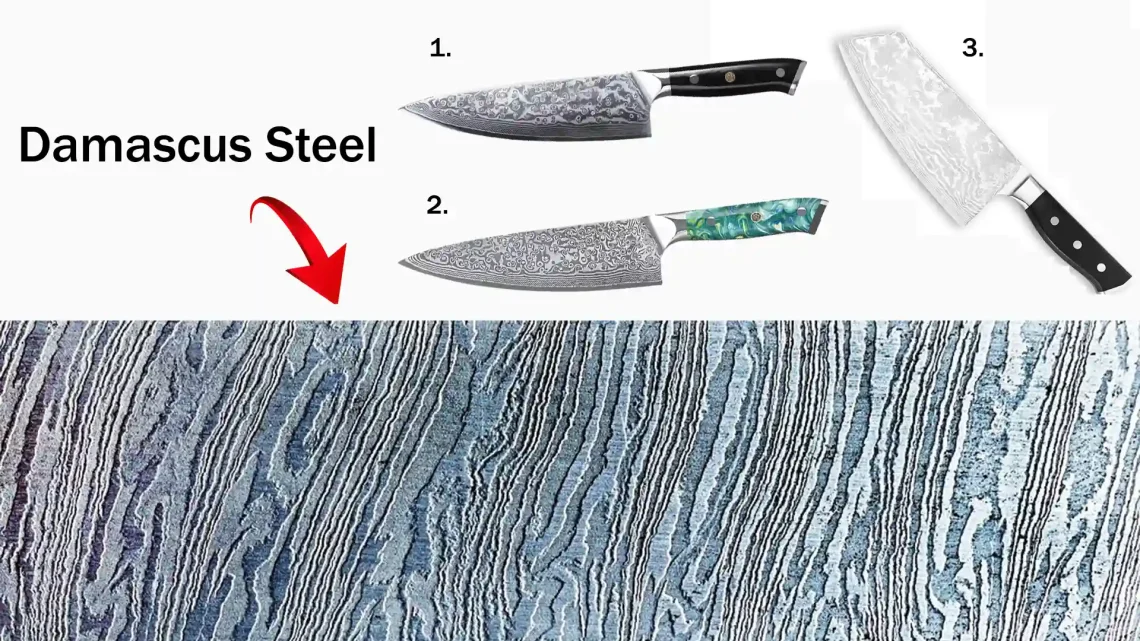
What Is A Damascus Kitchen Knife?
A Damascus kitchen knife is easily recognized by its unique, Ripple pattern on the blade. This pattern looks like ripples on water, with light and dark stripes that make the knife look very elegant. But the beauty isn’t just for show. Damascus knives are famous for staying sharp for a long time and being very strong and flexible.
There are two main types of Damascus steel: Cast Damascus Steel and Pattern-Welded Damascus Steel.
Damascus steel has an interesting history. It originally comes from Europe and Asia. The steel is made by layering and hammering sheets of iron and steel together. This process involves heating and forging the metal. A long time ago, people used Damascus steel to make sword blades and knives. Today, it’s mostly used for pocket knives, butterfly knives, and fixed-blade knives.
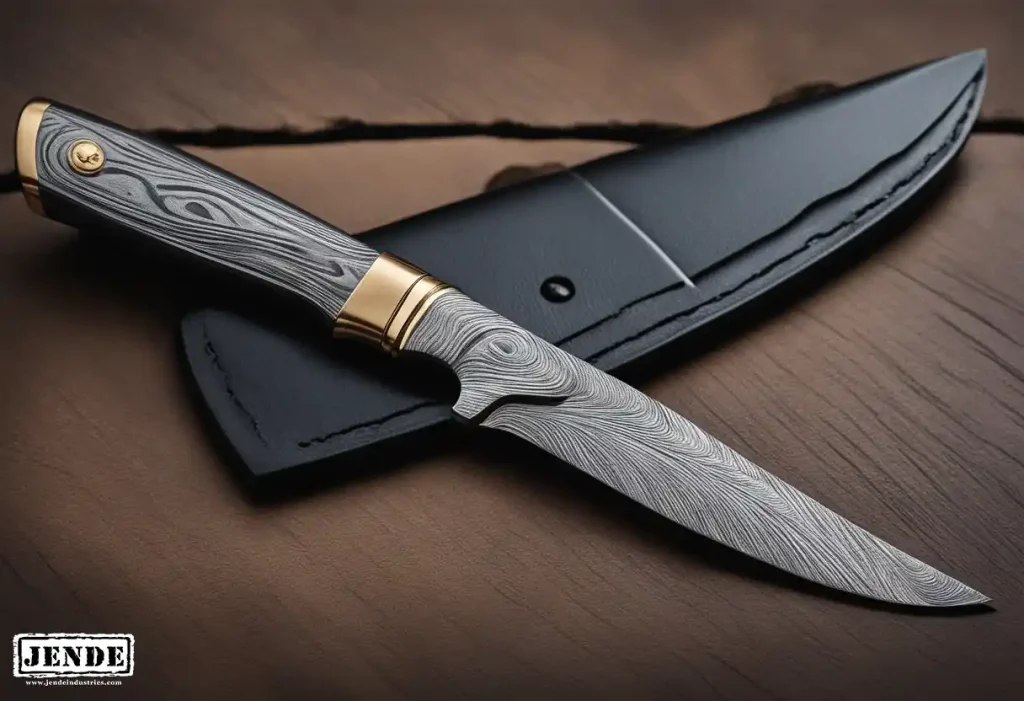
So, a Damascus kitchen knife is not just a pretty knife—it’s also a practical and durable choice for anyone who loves cooking.
Difference Between Cast Damascus Steel and Pattern-Welded Damascus Steel
Cast Damascus Steel and Pattern-Welded Damascus Steel are two distinct types of Damascus steel, each with its own production method and characteristics.
Cast Damascus Steel is made by mixing sheets of iron and steel with charcoal. This mixture is then preserved in a no-oxygen environment and heated to produce forged Wootz steel, which originally comes from India. The slow and careful process helps achieve the signature wavy pattern of Damascus steel.
Pattern-Welded Damascus Steel is created by welding together plates of low and high carbon steels. This method involves drawing, cutting, and welding the steel repeatedly to get the desired pattern and quality. This process is time-consuming, which is why Pattern-Welded knives can be more expensive. However, some people argue that Pattern-Welded steel isn’t truly Damascus steel because some material is lost during surface treatment, especially due to firescale removal.
In modern production, Damascus steel is made by forge-welding different types of steel together. The metal is then manipulated and flattened to create multiple layers, enhancing the knife’s durability and sharpness.

So, while both types of steel have their unique properties and production methods, the choice between them often comes down to personal preference and intended use.
What to Look for When Shopping for a Damascus Kitchen Knife
When investing in a Damascus kitchen knife, whether it’s a chef’s knife, kitchen knife, or paring knife, there are several key factors to consider to ensure you’re getting a high-quality tool that suits your needs:
Execution
The blade is crucial for a knife’s performance and versatility. Damascus knives generally offer superior functionality compared to stainless steel or copper knives. However, if you prioritize longevity, note that carbon steel knives can be more durable than Damascus steel when properly sharpened. They often have a Rockwell hardness rating that’s 2-3 points higher than typical Damascus knives.
Sturdiness
Damascus steel is renowned for its durability, dexterity, and precision. Look for a knife with a sturdy build to avoid kitchen mishaps and ensure longevity. A harder blade material reduces tension on the edge, enhancing the lifespan of your Damascus knife.
Budget
Damascus steel knives are usually more expensive than standard kitchen knives, but they are also a worthwhile investment in your culinary toolkit. While they might represent a splurge, a high-quality Damascus knife is designed to last a lifetime, making it a valuable addition to both professional and home kitchens. Consider it as an investment in efficiency and quality for your culinary endeavors.
How Damascus Kitchen Knives Are Made
Damascus steel is created through a process that combines different types of steel to produce distinctive, one-of-a-kind designs. This technique, which dates back over 2,000 years to ancient India, involves several key steps:
Combining Steel Types
Damascus steel begins with the welding of two or more types of steel, such as Vanadium and Nickel. The steel is fused together in a process that forms a billet, which is then shaped into the desired knife pattern. This fusion creates the characteristic wavy or layered appearance of Damascus steel.
Shaping and Hardening
Once the billet is shaped, the knife can be hardened or annealed to improve its durability and performance. This process helps to achieve the desired hardness and flexibility in the blade.
Refolding and Etching
Refolding the steel is a technique used to even out any imperfections and remove impurities. Acid etching is also employed to enhance and accentuate the unique Damascus pattern on the blade, giving each knife its distinctive appearance.
Historical Context and Modern Techniques
Ancient Damascus steel, particularly Wootz steel, was renowned for its exceptional strength, durability, and flexibility. In contrast, modern Damascus knives often use high carbon steel and various combinations of elements to replicate some of these traditional properties. Despite advancements, many contemporary Damascus knives focus more on aesthetics than on the original functional qualities of ancient blades.
Current Market Considerations
Today, the market is filled with many knives labeled as “Damascus steel,” but not all of them adhere to the traditional methods or offer the same quality. It’s important to consider not just the appearance of the knife, but also its material, sharpness, and durability to ensure you are getting a genuine and functional Damascus knife.




Great explanation! Damascus kitchen knives are fascinating not only because of their beautiful layered patterns but also because of the forging process behind them. The combination of different steels creates blades that can offer excellent durability and edge retention while still looking unique. It’s interesting to see how traditional Damascus techniques have evolved into modern kitchen knives used by both home cooks and professional chefs.