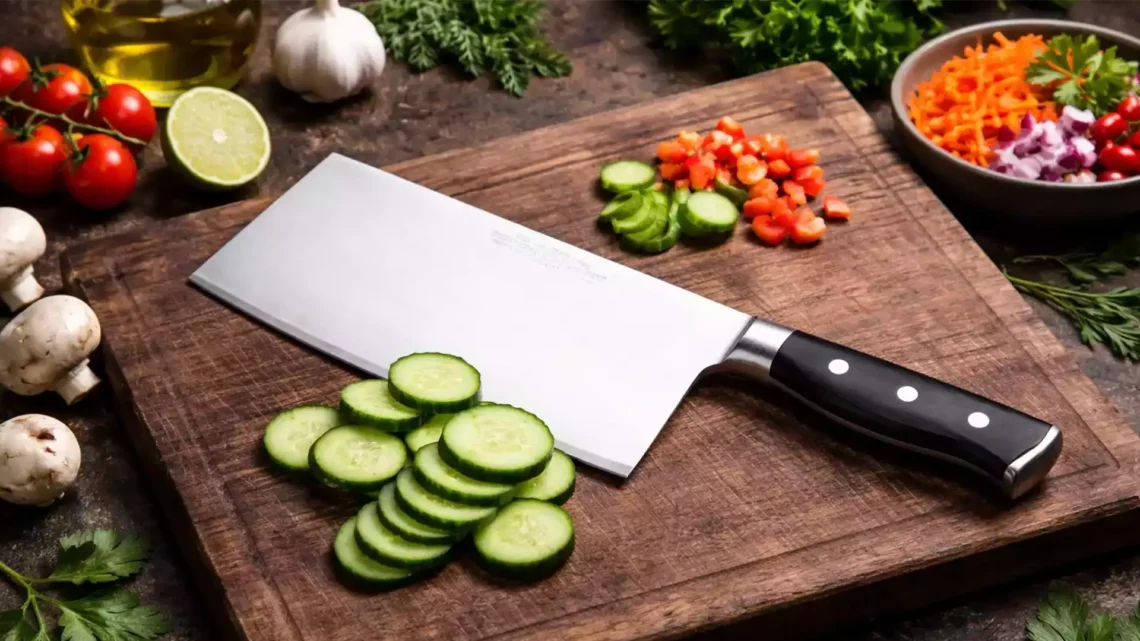
A Chinese slicing cleaver, also known as a Chinese chef’s knife or “Piàn dāo” (片刀), is a versatile kitchen Knife for a variety of tasks such as slicing, dicing, and even mincing. Despite its resemblance to a Western meat cleaver, it’s primarily used for vegetables, meats, and other ingredients rather than heavy-duty tasks like cutting through bones.
Chinese Slicing Cleaver: Overview
| Feature | Description |
|---|---|
| Blade Shape | Rectangular, flat edge, wide surface |
| Blade Length | Typically 7–9 inches |
| Blade Thickness | Thinner than meat cleavers (approx. 2–3 mm), optimized for slicing |
| Weight | Medium-light for better control and less fatigue |
| Materials | High-carbon steel or stainless steel |
| Edge Type | Double-beveled (sharpened on both sides) |
Key Features:
- Blade Shape: The blade is typically rectangular and broad, which allows for easy scooping of chopped ingredients. The straight edge makes it suitable for precise slicing.
- Blade Material: The blade is usually made from high-carbon steel, stainless steel, or Damascus steel. High-carbon steel blades hold their edge longer but may require more maintenance to prevent rust, while stainless steel is more resistant to rust but may dull more quickly.
- Blade Thickness: Unlike a meat cleaver, the slicing cleaver has a thinner blade that is designed for precision and versatility rather than brute force.
- Handle: The handle can be made from various materials, including wood, plastic, or metal. It should provide a comfortable grip and good balance.
Uses:
- Vegetable Prep: The wide blade is perfect for slicing, and dicing vegetables. Its flat side can also be used to crush garlic or ginger.
- Meat Preparation: It can slice through boneless meats, fish, and poultry with ease, and is also great for trimming fat or preparing thin cuts.
- Scooping and Transferring Food: The broad blade doubles as a scoop to transfer chopped ingredients from the cutting board to the cooking pot.
⚠️ Limitations:
- Not designed for bones (use a Chinese chopper cleaver instead)
- Can feel unwieldy to those unfamiliar with its balance
- Requires sharpening skill due to the long, straight edge
Techniques:
- Rock Chop: The tip remains on the cutting board while the rear of the blade is lifted and brought down.
- Push Cut: The blade is pushed forward and downward to slice through ingredients cleanly.
- Tap Chop: The cleaver is used to make quick, slicing motions, great for fine dicing or creating thin slices.
Types of Chinese slicing cleavers:
There are several types of Chinese slicing cleavers, each designed for specific tasks in the kitchen. Here are some of the most common types:
- Chinese Chef’s Knife (Cai Dao): This is the most versatile cleaver, suitable for slicing, and dicing vegetables, meat, and fish. It has a wide blade that can also be used for scooping.
- Meat Cleaver (Rou Dao): Heavier and sturdier, this cleaver is designed primarily for cutting through bones and tougher cuts of meat. The thicker blade provides extra weight for more forceful task.
- Vegetable Cleaver (Shu Cai Dao): This cleaver is typically lighter and thinner, designed specifically for slicing vegetables. It often features a sharper edge for precision.
- Boning Cleaver: Similar to the meat cleaver but with a narrower blade, this is used for deboning meat and fish. It allows for more manoeuvrability around bones and joints.
- Slicing Cleaver: This type is designed for precision slicing, especially for delicate items like fish or thin cuts of meat. It often has a thinner blade and a sharper edge.
Tips for Selecting the Right Chinese Cleaver
- Blade Material: High-carbon steel offers excellent sharpness and edge retention, while stainless steel provides corrosion resistance.
- Handle Comfort: Ensure the handle provides a secure grip, especially if you’ll be using the cleaver for extended periods.
- Weight and Balance: A well-balanced cleaver will reduce fatigue and increase precision during use.
- Purpose: Determine if you need a cleaver primarily for slicing vegetables, cutting meat, or both, as some are specialized for specific tasks.
The Chinese slicing cleaver is considered a multi-purpose knife in many kitchens, especially those with a focus on Asian cooking, where its design offers both functionality and efficiency.