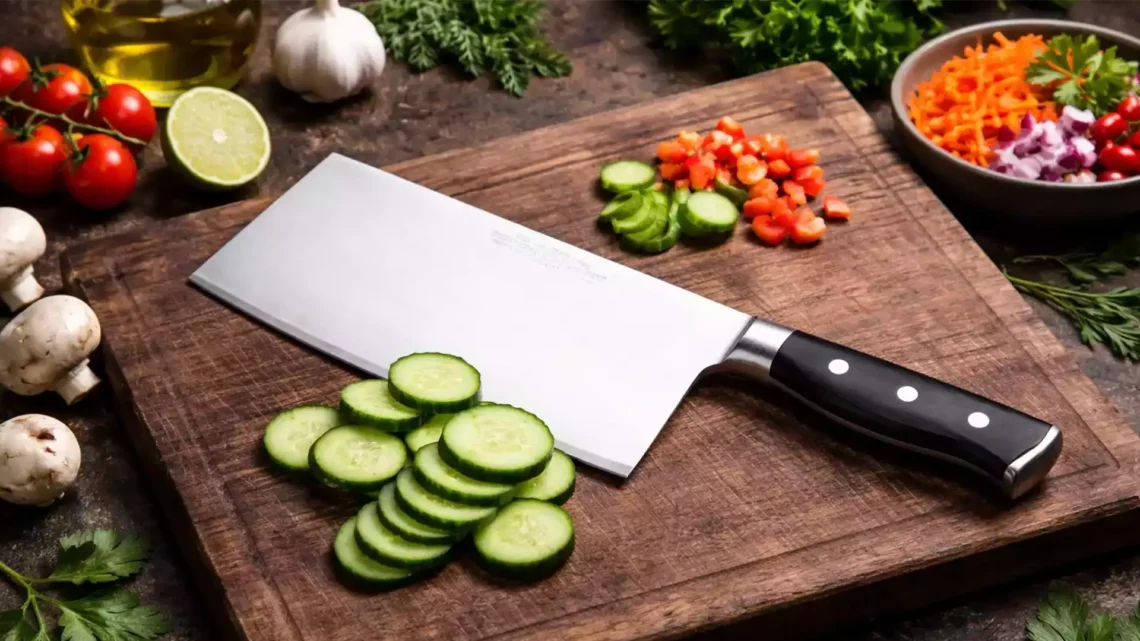
Today, we’re going to take this old, dull kitchen knife and turn it back into a sharp and useful tool. Here we have an 8-inch slicing knife by Henkels; it’s actually quite a good knife that has been really languishing in my drawer because it’s just so dull.
Why Are We Doing This?
This knife is very dull at the moment. It’s tough to cut through something with it, and it’s just not very efficient. I want to re角 the blade to 15 degrees from its usual 20-degree angle, which most of the Japanese knives are. Hopefully, it will be much more suitable for slicing tomatoes.
Tools and Setup
For this task, I’ll be using a Tormek sharpening system. One of the beauties of the Tormek is that it runs in water, so it keeps the blade nice and cool while sharpening. This is pretty important since we don’t want to overheat the blade and weaken the steel.
So here’s what I’ll be using:
- Diamond Stone: Initial grinding
- Original Grindstone: Sharpening to a finer edge
- Water with Anti-Corrosion Concentrate: To keep the stones clean and effective.
- Sharpening the Knife
- Get the Knife Ready: I first setup the knife jig. It helps to hold the knife at the correct angle while sharpening. You can sharpen the knife with the stone moving in towards you or away from you. I personally sharpen with the stone coming towards me.
Set the Angle: Most Western knives are set at a 20-degree angle. I am going to set this one more towards 15 for a sharper edge. I will adjust the jig accordingly.
Mark the Blade: I mark the blade to know where I’ve been sharpening. That helps me be sure that I’m grinding evenly.
Start Grinding: Grind—I have to hold the knife steady and flat against the stone. One should move it smooth, making sure the whole blade comes into contact with the stone.
Sharpening Tips: Long knives, like this, need lots of movement. Keep the knife steady; keep the angle constant. When you get to the tip of the blade, it’s best to bring your arm out rather than push it back. This helps maintain a uniform bevel.
Check Your Work: Notice the water line on the stone; this will let you know if you are sharpening evenly. If the water is even all the way across the stone, you’re doing it right.
Final Touches: Once you have ground with the coarse stone, progress to finer grits, ending with the extra fine stone. This gives the blade a sharp, polished edge.
Results
Finally, once sharpened, the knife will have a new sharp edge, and the slicing of tomatoes will just be perfect with it. It cuts good with a smooth ease. Though the Western knives are not as hard as that of Japanese knives, for this particular knife, even changing the angle to 15 degrees is possible. It shall work well as it would only be used on tomatoes.
Conclusion:
It was just the right kind of project to do. Using the Tormek system made all of the difference to sharpen that knife. If you’re interested in the tools used, well, there is a link below this in the description. And thanks again to Tormek for their great products. Now if you’ve got any questions or comments, feel free to leave them below.