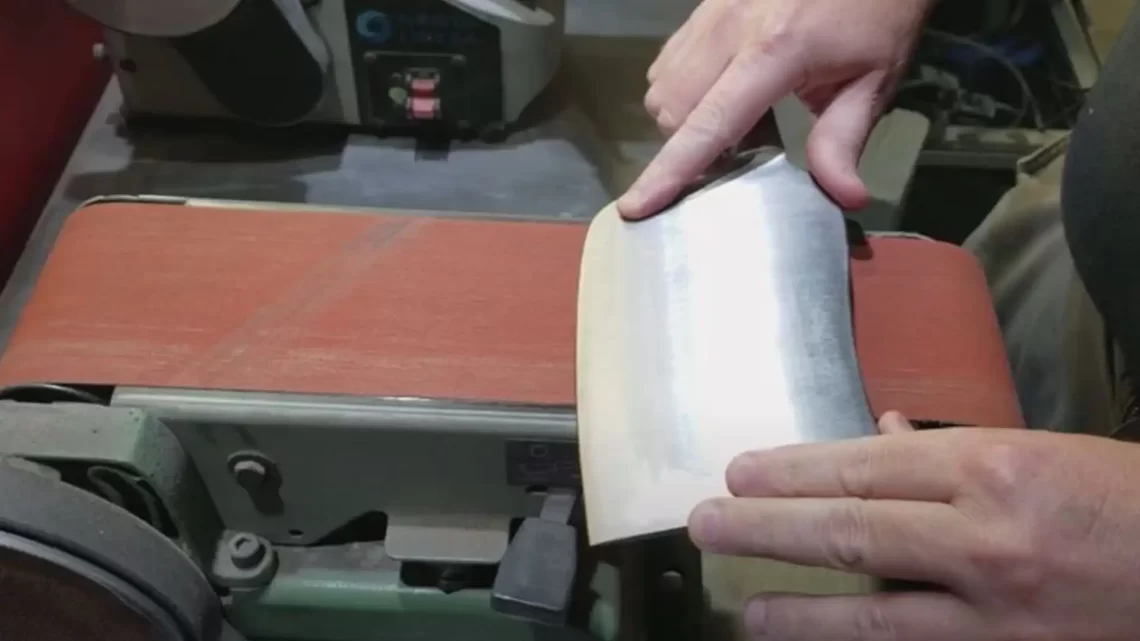
Sharpening a meat cleaver on a belt sander involves a strategic approach with two distinct blade positions, ensuring a superior bevel for enhanced cutting efficacy and longevity. Initially, positioning the blade perpendicular to the belt initiates the sharpening process, setting the foundation for a well-crafted edge. Subsequently, adjusting the angle askew during the second step serves a crucial purpose: it maximizes the surface area of the edge in contact with the abrasive belt. This deliberate tilt contributes to a more uniform and consistent sharpening outcome, ultimately refining the cleaver’s cutting capabilities.
For the D-12 Maestro Wu Bombshell Steel Cleaver, this sharpening technique holds particular significance due to its heavier build. The method’s precision and attention to varying blade positions play a pivotal role in ensuring the cleaver’s effectiveness. However, this belt sander approach only marks the initial stages of the sharpening process. The subsequent phases involve the meticulous use of sharpening stones to further refine and perfect the edge, culminating in a blade that’s primed for optimal performance.
This comprehensive sharpening routine, combining the belt sander’s distinct blade positions with the finesse of sharpening stones, transforms the D-12 Maestro Wu Bombshell Steel Cleaver into a formidable culinary tool. It’s a meticulous process that not only hones the blade but also amplifies its durability, promising prolonged efficiency and precision in the kitchen.
Videos: