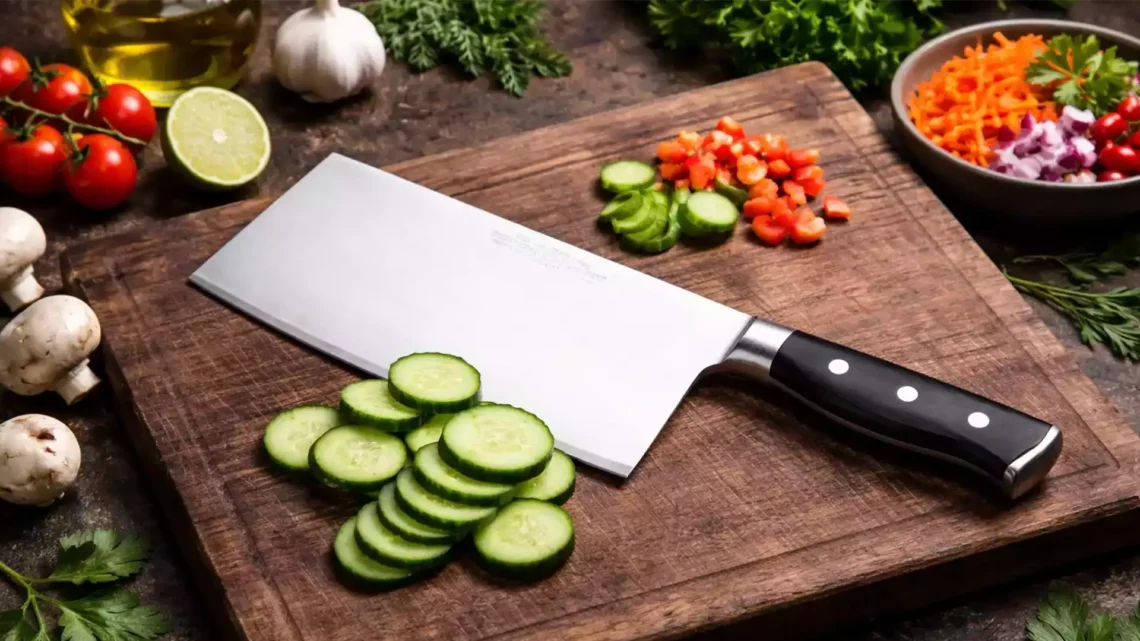
A meat cleaver is a large, heavy-duty kitchen knife designed for cutting through thick meat and bones. It is one of the most iconic and powerful knives in a butcher’s or chef’s tool kit. Here’s a breakdown of its characteristics:
Key Features:
- Large, Rectangular Blade: The blade of a meat cleaver is broad and rectangular, which makes it perfect for delivering heavy chopping motions and breaking through tough cuts of meat and bone.
- Heavy Weight: The weight of the cleaver is one of its most important features. It relies on this mass to provide enough force for cutting through bone, cartilage, and dense meat. This reduces the need for excessive downward pressure by the user.
- Durability and Thickness: The blade is typically thick and made from durable materials like stainless steel or high-carbon steel to withstand the repeated force of chopping bones and tough cuts of meat.
- Strong, Ergonomic Handle: The handle is designed to be sturdy, providing a comfortable grip while minimizing hand fatigue when using the knife for extended periods.

Common Uses:
- Cutting Through Bones: The cleaver is powerful enough to chop through bones, especially when preparing meat from larger animals such as cows, pigs, and chickens.
- Breaking Down Large Cuts of Meat: It’s often used to divide large sections of meat into smaller, more manageable portions.
- Crushing Ingredients: The flat, wide blade can also be used for crushing garlic, ginger, or other ingredients, similar to a mortar and pestle.
- Scooping Up Ingredients: After chopping vegetables or meat, the wide blade makes it easy to scoop them up and transfer to a pot or pan.
Versatility:
While the cleaver is primarily designed for meat and bones, it can also be used to chop vegetables, particularly hard ones like pumpkins, due to its strength. However, it’s less suitable for delicate tasks like fine slicing or dicing.
Difference from a Bone Chopping Knife:
A bone chopping knife is often slightly thinner and more specialized for bone cutting, while a meat cleaver is more versatile and can be used for a wider variety of kitchen tasks, including both bone and vegetable preparation.
The meat cleaver is a kitchen essential for those who regularly handle large amounts of meat or need a tool that can tackle both heavy and light chopping tasks. Would you like to know how to choose a cleaver or some brand recommendations?
How to Choose a meat cleaver ?
Choosing the right meat cleaver depends on several key factors, such as what you’ll be using it for, its design, and your comfort level when handling it. Here are some important considerations to help you choose the perfect meat cleaver:
1. Blade Material:
- High-Carbon Steel: Cleavers made from high-carbon steel are known for their durability and ability to hold a sharp edge. However, they may require more maintenance to prevent rust and corrosion.
- Stainless Steel: More resistant to rust and easier to maintain, but they might not hold an edge as long as high-carbon steel. However, modern stainless steel blades are also very durable and are a good option for general use.
2. Blade Size and Weight:
- Blade Size: Meat cleavers usually come in sizes ranging from 6 to 9 inches. Larger blades provide more force for cutting through bones, while smaller blades offer better control for lighter tasks.
- Blade Weight: Heavier cleavers make it easier to chop through bones and tougher cuts of meat with less effort. However, if you prefer more control or plan to use the cleaver for chopping vegetables or boneless meat, a lighter cleaver may be more suitable.
Tip: Choose a cleaver weight that feels comfortable to you. A heavier cleaver is more powerful, but a lighter one is easier to handle for extended periods.
3. Handle Comfort and Grip:
- Ergonomic Design: A well-designed, ergonomic handle will provide comfort during extended use, reducing hand fatigue. Handles can be made from wood, plastic, or metal. Wooden handles are comfortable and traditional, while plastic and metal handles are often more durable and easier to clean.
- Grip: The handle should have a non-slip design for safety, especially if you’re handling greasy or wet ingredients.
4. Blade Thickness:
- Thicker blades are better suited for heavy-duty chopping, such as cutting through bones, while thinner blades are more versatile and useful for slicing or chopping vegetables and boneless meat. If you plan to use the cleaver for a variety of tasks, opt for a cleaver with a medium-thickness blade.
5. Full Tang Construction:
- Full Tang means that the blade extends through the entire length of the handle, providing better balance and durability. Full tang cleavers are generally stronger and less likely to break under heavy use.
6. Versatility:
- If you primarily need a cleaver for butchery tasks like cutting through bones, opt for a heavy-duty cleaver designed specifically for this purpose. If you want more versatility, choose a cleaver with a moderate blade thickness that can handle both meat and vegetables.
7. Brand Reputation and Reviews:
- Reputable brands known for high-quality kitchen tools tend to offer more reliable and durable cleavers. Check reviews for durability, sharpness retention, and how well the cleaver performs in real-world settings.
- Popular brands include Maestro wu, Wüsthof, Shun, Zwilling J.A. Henckels, and Dexter-Russell.
8. Price:
- Meat cleavers can range in price depending on the brand, materials, and craftsmanship. More expensive cleavers from high-end brands usually offer better durability and edge retention, but there are also affordable cleavers that perform well for home cooking.
9. Maintenance:
- Consider how much maintenance you’re willing to do. High-carbon steel blades may need regular sharpening and oiling to prevent rust, while stainless steel requires less maintenance.
| Feature | Description | Options / Notes |
|---|---|---|
| Blade Material | Determines sharpness, durability, and corrosion resistance | High Carbon Steel, Stainless Steel, Damascus Steel |
| Blade Length | Affects leverage and chopping capacity | 6″–9″ (Standard: 7″) |
| Blade Thickness | Impacts cutting power and resistance | 3mm–8mm (Thicker = more force, less finesse) |
| Weight | Heavier cleavers handle bones better | 1.5 – 2.5 lbs typically |
| Handle Material | Affects grip, comfort, and hygiene | Wood, Pakkawood, Plastic, G10, Stainless Steel |
| Tang Type | Refers to how the blade connects to the handle | Full Tang (more durable), Partial Tang |
| Edge Angle | Influences sharpness vs. durability balance | 20–25 degrees per side (European); 15–20 degrees (Asian) |
| Blade Shape | Impacts cutting style and food release | Rectangular, curved edge, straight edge |
| Intended Use | Specific design for chopping bone, vegetables, or all-purpose | Bone cleaver, Chinese cleaver, Vegetable cleaver |
| Hole in Blade | Common in bone cleavers for hanging or weight balance | Present in most traditional bone cleavers |
| Finish | Surface treatment for aesthetics and function | Polished, Hammered (tsuchime), Matte |
| Maintenance | Level of upkeep required (sharpening, rust prevention) | High carbon requires oiling; stainless = low maintenance |
Summary of Key Points:
- Purpose: Choose based on whether you’ll mostly chop bones, meat, or need a versatile tool for vegetables too.
- Comfort: The cleaver should feel good in your hand with a solid grip and balance.
- Blade: Pick the right blade material (high-carbon steel vs. stainless steel) and ensure it’s thick and heavy enough for your tasks.
- Durability: Full tang construction is preferred for strength.
By considering these factors, you can find a meat cleaver that suits your needs, whether you’re a home cook or a professional chef.