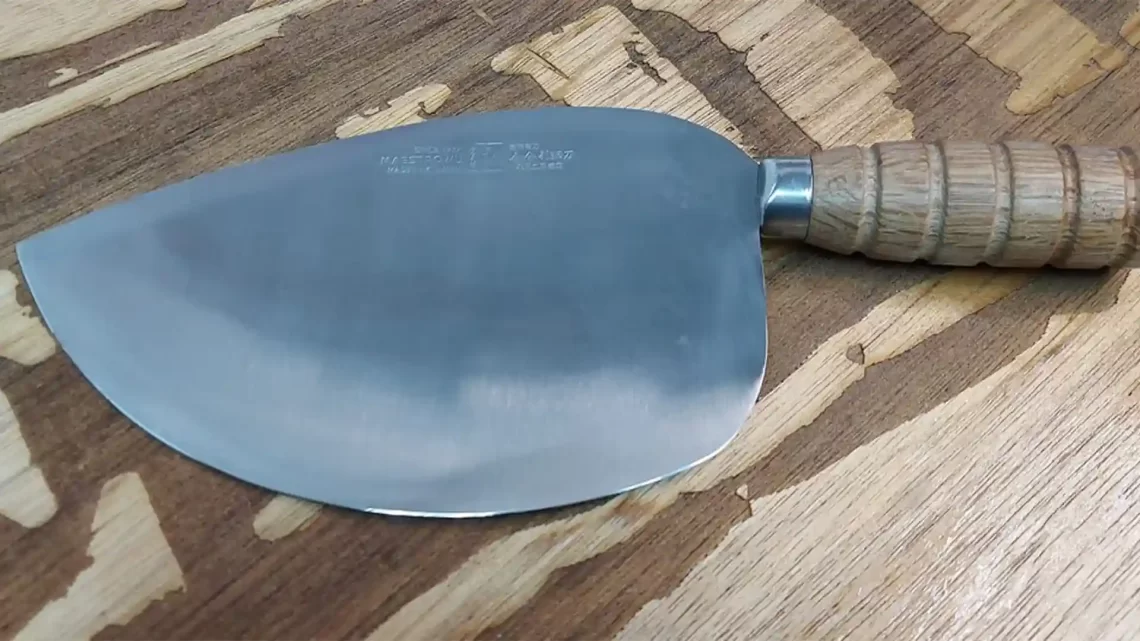
Serbian chef’s knives are usually made with high carbon steel, which means they stay sharp for a long time.
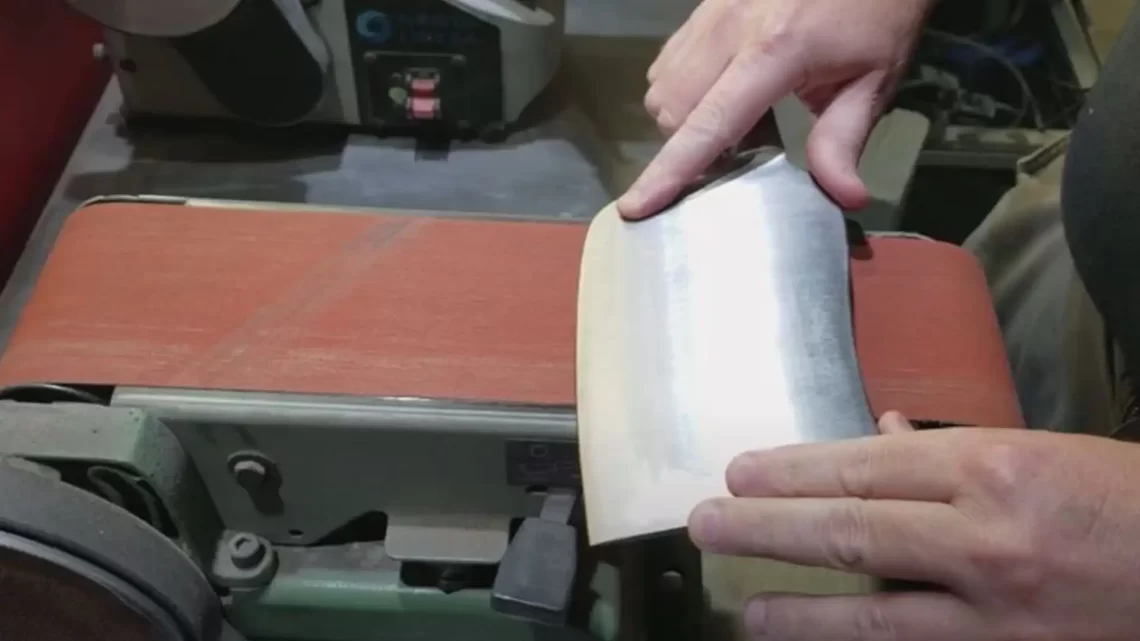
However, like everything else, Serbian chef’s knives will eventually need sharpening. Their unique shape might make you nervous if you’re used to sharpening other knives. But don’t worry—Serbian chef’s knives can be sharpened just like any other chef’s knife.
Sharpening a Serbian chef’s knife involves a few simple steps. Here’s how you can do it:
- Choose Your Sharpening Tool: You can use a sharpening stone, a honing rod, or an electric sharpener. For a traditional approach, a sharpening stone is often preferred.
- Prepare the Sharpening Stone: If you’re using a sharpening stone, soak it in water for about 10-15 minutes if it’s a water stone. If it’s an oil stone, apply a thin layer of honing oil.
- Find the Right Angle: Hold the knife at a 20-degree angle to the sharpening surface. This is the typical angle for a sharp and durable edge. Some people prefer a slightly different angle, but 20 degrees is a good starting point.
- Sharpen the Knife:
- For a sharpening stone: Place the blade against the stone and move it in a circular or sweeping motion from the base to the tip of the blade. Apply even pressure and maintain the angle. Repeat this process on both sides of the blade.
- For a honing rod: Hold the rod vertically and draw the blade down it from the base to the tip. Alternate sides with each stroke.
- Check the Sharpness: Test the sharpness of the blade by slicing through a piece of paper. The knife should cut cleanly without tearing.
- Clean the Knife: After sharpening, rinse the knife and dry it thoroughly. Sharpening can leave small metal particles on the blade.
- Hone Regularly: To keep your Serbian chef’s knife in top shape, regularly hone it to maintain the edge. This helps prevent the need for frequent sharpening.
By following these steps, you can keep your Serbian chef’s knife sharp and ready for any kitchen task. Read this article for How to Use a Serbian Chef Knife ?