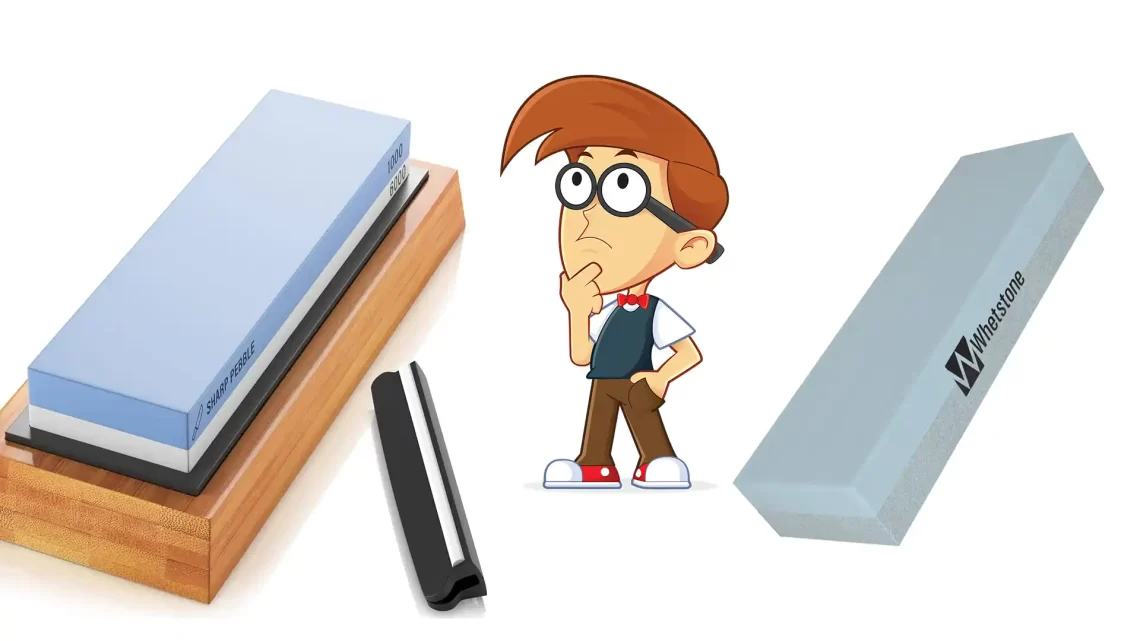
The below questions arise because the words “wet” and “whet” sound similar. However, they’re actually different, which can cause confusion. When discussing sharpening stones, the correct term is always “whet.”
“I heard this is called a ‘wet stone,’ but I thought it used oil. Should I use oil or water on it?”
“The Sharpening guy said I need a ‘wet stone.’ What should I get?”
“Are water stones and ‘wet stones’ the same thing?”
“What’s a ‘whetstone’?”
To Sharpen = To Whet
In the past, the process of sharpening was referred to as “whetting.” So, to sharpen a blade was to “whet” it. Any stone used for this purpose was called a “whetstone” or “whet stone.” While terms like “sharpening stone” or “honing stone” are more common nowadays, “whetstone” is still occasionally used. You might also hear terms like “whet rock” or “wet rock,” though these seem to be regional variations.
All Sharpening Stones are Whetstones
Technically, the term “whetstone” applies to any type of sharpening stone, regardless of the cutting fluid used with it. However, because “whet” sounds like “wet,” some assume it refers specifically to stones used with water. In reality, water stones, oil stones, Arkansas stones, diamond stones, and ceramic stones are all types of whetstones. So, all water stones are whetstones, but not all whetstones are water stones.
For Word Enthusiasts
As a fun tidbit, the word “whet” appears in unexpected places. For example, a small owl species is called the saw-whet owl because its call resembles the sound of sharpening a saw with a file. Additionally, the phrase “to whet your appetite” originates from the idea of hunger becoming sharper at the thought of food.
The Wet vs. Dry Showdown
If you want to read about Guidance on using your sharpening stones wet or dry then click this article link Use My Sharpening Stones Wet or Dry?