

There exists a variety of sharpening stones differing in types and sizes. This discussion focuses on the materials employed in their production and the respective pros and cons of each. By understanding these factors, you can make an informed choice regarding which type best fits your needs. Shall we begin with the concise overview? If intrigued, read on to delve into the extended version for more details!
In a nutshell:
Sharpening stones fall into two main categories: natural and synthetic. Natural stones are exactly that—stones sourced from quarries. On the other hand, synthetic sharpening stones are crafted from various materials, commonly ceramics and diamond. Each material offers distinct advantages and disadvantages, influencing their suitability for different sharpening needs.
Natural sharpening stones:
Natural sharpening stones are stones sourced directly from mountains, cut into straight pieces, and then packaged for distribution. Examples include Ardennes Coticule, Skerper Arkansas, and Belgian Blue stones. These stones offer unique qualities due to their natural origins, contributing to their longevity and the refined edge they provide during sharpening tasks.
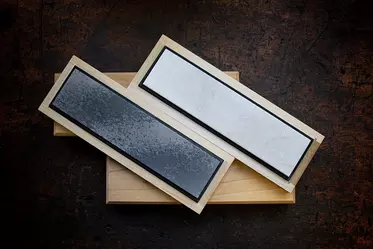
Pros and cons of natural sharpening stones:
Natural sharpening stones offer several advantages. They typically have a longer lifespan compared to synthetic alternatives. These stones also remove material slowly, resulting in a refined and more controlled sharpening process. Using a completely natural product to sharpen knives may appeal to those preferring eco-friendly options.
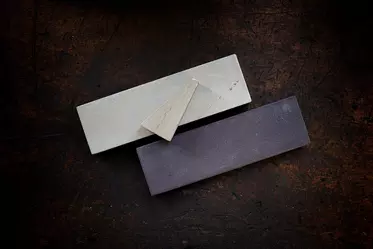
However, natural sharpening stones have drawbacks. They generally require more time for sharpening compared to synthetic stones. Additionally, each natural stone is unique, making it challenging to precisely determine grain size and coarseness. This variability can lead to inconsistent results, especially with higher grit sizes, which may not be ideal for some users.
Ceramic sharpening stones:
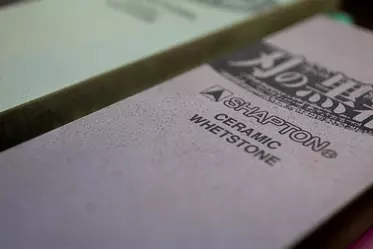
Ceramic sharpening stones are created by combining synthetic ceramic particles into a single stone. Brands like Spyderco, Skerper, Naniwa, and Shapton offer various examples of ceramic sharpening stones.
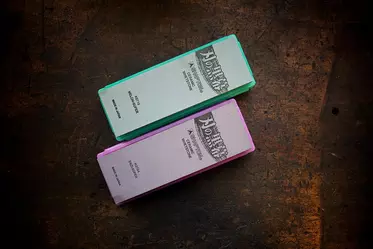
Advantages and disadvantages of ceramic sharpening stones
Ceramic sharpening stones are highly precise in their grain sizes due to the synthetic production of ceramic particles. This means that a sharpening stone rated at 8000 grit will reliably have an 8000 grit size. Additionally, ceramic sharpening stones are often affordable, making them accessible to many users. However, a drawback is the wide variety of ceramic sharpening stones available, each made from different ceramic particles. This diversity can lead to varying sharpening results and techniques, which we will explore further in the extended version.
Diamond-coated sharpening stones
A diamond-coated sharpening stone typically consists of a sheet embedded with minute diamond particles. This material is exceptionally durable and doesn’t wear out easily, especially when used correctly, requiring only a thin layer of sharpening material, usually around a millimeter thick. Notable examples of diamond-coated sharpening stones include products from DMT, EZE-LAP, and Atoma.
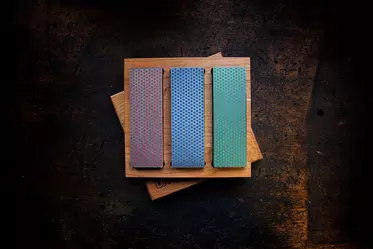
Pros and cons of a diamond-coated sharpening stone
Diamond, being the hardest natural material on earth, ensures that diamond-coated sharpening stones are exceptionally durable and effective. These stones are known for their ability to quickly remove material, reducing the time needed for sharpening. Moreover, they do not require water or oil during use, although a small amount of water or WD-40 can facilitate a smoother sharpening process. It’s worth noting that diamond-coated stones may initially be quite coarse, which means they can remove material very quickly, potentially altering the edge if excessive pressure is applied. To avoid this, it’s crucial to use minimal pressure and allow the diamonds to perform their task effectively.
Natural sharpening stones
In essence, almost any stone found in nature can potentially be used to sharpen a knife. However, not all stones are equal in this regard. Only a select few possess the necessary hardness and fine-grained structure to effectively function as sharpening stones. Throughout human history, tools have been honed on natural stones, providing centuries of accumulated wisdom on which stones are most suitable and why they excel. Two prominent natural sharpening stones merit mention: Novaculite and Coticule.
Novaculite
Novaculite, also known as Arkansas stone, is one of the most abundant types of natural sharpening stones. It is a form of quartz that has been utilized for honing tools for centuries. Originating from the Ouachita Mountains in Arkansas, these stones are prized for their ability to delicately remove metal and achieve superb sharpening outcomes. They are noted for their gentle and precise sharpening action, although they do so at a relatively slower pace compared to some alternatives. The Skerper Arkansas sharpening stones are examples of novaculite sharpening stones.
Coticule
Alongside novaculite, natural sharpening stones from Belgium enjoy global fame. These stones, known as Coticule, originate exclusively from a single open mine in Vielsalm, located in the Ardennes region. Coticule stones are primarily composed of silicon dioxide, also referred to as silica—a mineral akin to quartz, similar to Arkansas stones. Examples of natural Coticule sharpening stones include Ardennes Coticule sharpening stones and Belgian Blue sharpening stones.
Coticule natural stones typically contain between 30% and 40% spessartine, a variation of garnet. Garnet, being among the hardest natural minerals, is exceptionally well-suited for sharpening steel. During the sharpening process, these garnets are released, forming a sharpening paste that effectively sharpens blades
Ceramic Sharpening Stones
Ceramic sharpening stones are not simply made from baked clay; their production involves a more intricate process. These stones begin as powdered forms of aluminium oxide or silicon carbide, available in colors like white, brown, or grey. These synthetic powders are meticulously manufactured in laboratories to achieve specific grain sizes, as these minerals are not naturally found in these forms.
The powders are then blended with binding agents, which can vary widely—from natural substances like cellulose, wax, clay, and magnesium to synthetic materials such as polyacrylates, polyvinyl alcohol, or various synthetic resins. The exact formulation and binding process are often closely guarded by manufacturers.
Once mixed, the substance is pressed into molds to achieve the desired shape and heated near their melting points, typically between 1200 to 1700 degrees Celsius. This high temperature fuses the materials together without fully melting them. After cooling, the resulting blocks are cut and shaped into straight-edged sharpening stones. The final product is a durable ceramic sharpening stone known for its robustness and effectiveness.
Examples of ceramic sharpening stones include those crafted by Skerper, Spyderco, Shapton, and Naniwa.
Differences in Ceramic Sharpening Stones
Ceramic sharpening stones exhibit variations in color and thickness. The different colors often serve as indicators of the grain sizes available. Thickness differences, as well as the overall quality of the stone, largely stem from the choice of binding agents, the quality of aluminium oxide used, and the specific baking temperatures employed during production. These factors collectively contribute to the distinct characteristics found in different ceramic sharpening stones.
Within the range of ceramic stones, there are softer varieties that provide quick sharpening but wear down faster. Consequently, these stones tend to be slightly thicker. On the other hand, harder and thinner ceramic stones sharpen more slowly but offer extended durability. Despite sharing the same designated grain size, such as 1000, variations between brands can lead to differing results due to these intrinsic differences in material composition and production methods.
To ensure a consistent sharpening experience, particularly when purchasing multiple stones, it’s advisable to stick with a single brand. This approach guarantees that the grain sizes progress appropriately as you move up in grit levels.
Additionally, some ceramic sharpening stones incorporate additional sharpening particles, akin to the garnets found in natural stones. These extra hard particles are often made from synthetic sapphire, familiar in the manufacturing of premium watch glass. Examples of such stones include those produced by Spyderco and Fällkniven.
Diamond-coated Sharpening Stones
Diamond-coated sharpening stones are constructed with a base primarily made of aluminum and plastic, bolstered by a thin iron sheet embedded with synthetic diamond sharpening particles. The process of affixing these diamond particles to the iron sheet involves a complex galvanization method rather than simple adhesive application.
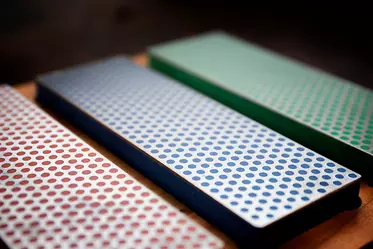
In this process, an electrically charged environment facilitates the bonding of the diamond particles to the iron sheet. Nickel is employed as a protective layer, ensuring the cohesion of the diamond particles over time. This intricate process guarantees that the diamonds remain securely anchored to the iron sheet, maintaining their effectiveness throughout the sharpening stone’s lifespan.
Lab-Grown Diamonds for Sharpening Stones
The diamonds utilized in sharpening stones are not natural diamonds but rather laboratory-grown diamonds that closely mimic natural diamonds at a molecular level. Unlike natural diamonds that take millions of years to form, synthetic diamonds can be produced in large quantities within a single day. This replication of natural diamond creation occurs through two main methods: High Pressure High Temperature (HTPT) and Chemical Vapor Deposition (CVD).
HTPT involves simulating natural conditions by subjecting graphite or a small diamond to immense pressure and heat, often generated by a BARS (Belt and Road System) apparatus. This process creates the environment necessary for diamonds to grow. On the other hand, CVD enables the extraction of diamonds from hydrocarbon gas. By manipulating the conditions within a chamber, carbon atoms in the gas settle on a crystalline substrate, facilitating the production of synthetic diamonds.
These methods enable the global production of millions of synthetic diamonds annually, which are utilized not only in jewellery but also as effective sharpening agents in sharpening stones.
Cubic Boron Nitride (CBN) for Sharpening Stones
Sharpening stones containing cubic boron nitride (CBN) are crafted in a manner similar to synthetic diamonds. CBN particles are electroplated onto a metal layer that sits atop a metal base. These CBN crystals are grown under high pressure and high temperatures, a process designed to accelerate or replicate the natural growth of crystals. However, compared to synthetic diamonds, this growth process for CBN is slower.
In terms of hardness, diamond and cubic boron nitride are quite comparable. At room temperature, diamond is harder than CBN. However, at temperatures exceeding 700°C, CBN surpasses diamond in hardness. Achieving such high temperatures during manual sharpening of kitchen or pocket knives is challenging, negating this particular advantage of CBN in practical use. Nevertheless, CBN exhibits superior chemical stability compared to diamond, which can react with transition metals like nickel, cobalt, and chromium present in certain types of steel. Whether this reactivity extends to diamond-coated sharpening stones remains undetermined.
The cost of CBN sharpening stones is similar to that of diamond-coated stones. Even sharpening experts may find it difficult to discern differences between a CBN sharpening stone and a diamond-coated one. Whether opting for a diamond or CBN sharpening stone, users can expect years of effective sharpening performance. One notable example of a sharpening stone featuring cubic boron nitride is the Spyderco sharpening rods.
Mono or Polycrystalline Diamonds in Sharpening Stones
The CVD (Chemical Vapor Deposition) method offers the advantage of producing both mono and polycrystalline diamonds. A monocrystalline diamond consists of a single crystallite, typically ranging from a few nanometers up to a maximum of 1 mm in size. In contrast, a polycrystalline diamond is composed of multiple crystallites fused together.

Monocrystalline sharpening stones benefit from the uniformity of their diamond crystals, which prevents breakage but gradually wears out over time. This results in finer and slower sharpening performance until the diamonds are sufficiently worn down, rendering the stone ineffective. On the other hand, polycrystalline diamonds dissolve more evenly during the sharpening process. As the surface wears down, new diamond particles are exposed, ensuring consistent grain size throughout the stone’s lifespan and maintaining effectiveness. Eventually, however, both types of diamonds will completely wear out.
The longevity of a diamond sharpening stone depends on factors such as the pressure applied during sharpening, the type of material being sharpened, and the frequency of use. With proper use, a diamond sharpening stone can endure for many years, offering reliable sharpening performance.
Exception: Naniwa Diamond Stones
The Naniwa Diamond Stones stand out among diamond-coated sharpening stones due to their unique construction method. Unlike typical diamond stones where diamond particles are galvanized onto a nickel sheet, the Naniwa Diamond Stones feature diamond particles embedded within a layer of synthetic resin. This method is similar to how ceramic sharpening stones are manufactured.
By using synthetic resin as the binding agent instead of a metal layer, Naniwa ensures a different sharpening experience. The resin-bound diamonds offer distinct advantages, potentially including enhanced durability, different sharpening characteristics, and possibly a different feel during use compared to traditional diamond-coated stones.
This innovative approach by Naniwa provides users with an alternative option within the realm of diamond sharpening stones, catering to those seeking specific performance attributes or a unique sharpening experience.
Conclusion:
If you prioritize speed and efficient material removal, a diamond-coated sharpening stone is your best choice. It excels at quickly shaping edges, although the final sharpness may not match that of a ceramic sharpening stone. For those who value razor-sharp results and are willing to spend a bit more time sharpening, ceramic sharpening stones are ideal. Keep in mind that the quality varies among ceramic stones, so choose one that suits your needs best.
Seeking a forgiving and gentle sharpening experience? Natural sharpening stones offer a calm approach, even though they may require more time. The results they deliver, however, are consistently impressive.
Each type of sharpening stone has its own grain size, making it crucial to select the right one for your needs. If you’re unsure whether to start with a coarse or fine stone, we can provide further guidance on choosing the appropriate sharpening stone to begin with.




Great explanation of the different sharpening stone materials and how they affect sharpening performance. Understanding the differences between natural, ceramic, and diamond stones really helps users choose the right option for their tools. I especially appreciate discussions around water stones because many professionals prefer the smooth sharpening experience they provide.
I would like to know more about diamond stones CBN stones and Nan Ewa stones. Personality I start off with diamond course stones grit size 120 140 or 160. Then I moved to petrified 285 and 550 then I go from 15 microns 9 µm 6 µm and 3 µm.
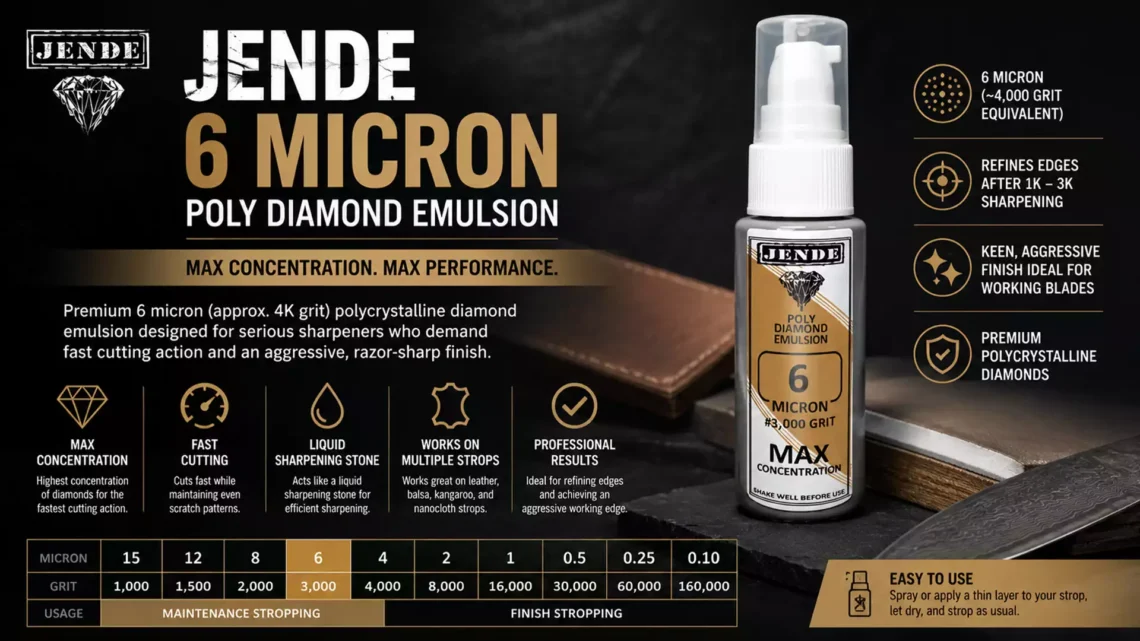
That’s a solid progression, especially starting with diamond stones for fast material removal. Moving into finer grits like 15µm down to 3µm is a great way to refine the edge.
CBN stones can offer a more consistent scratch pattern compared to diamonds, while Naniwa stones are excellent for finishing and polishing. It really comes down to preference and the type of steel you’re working with.
What kind of knives or steels are you usually sharpening?